
Lissa
On losing Carrie
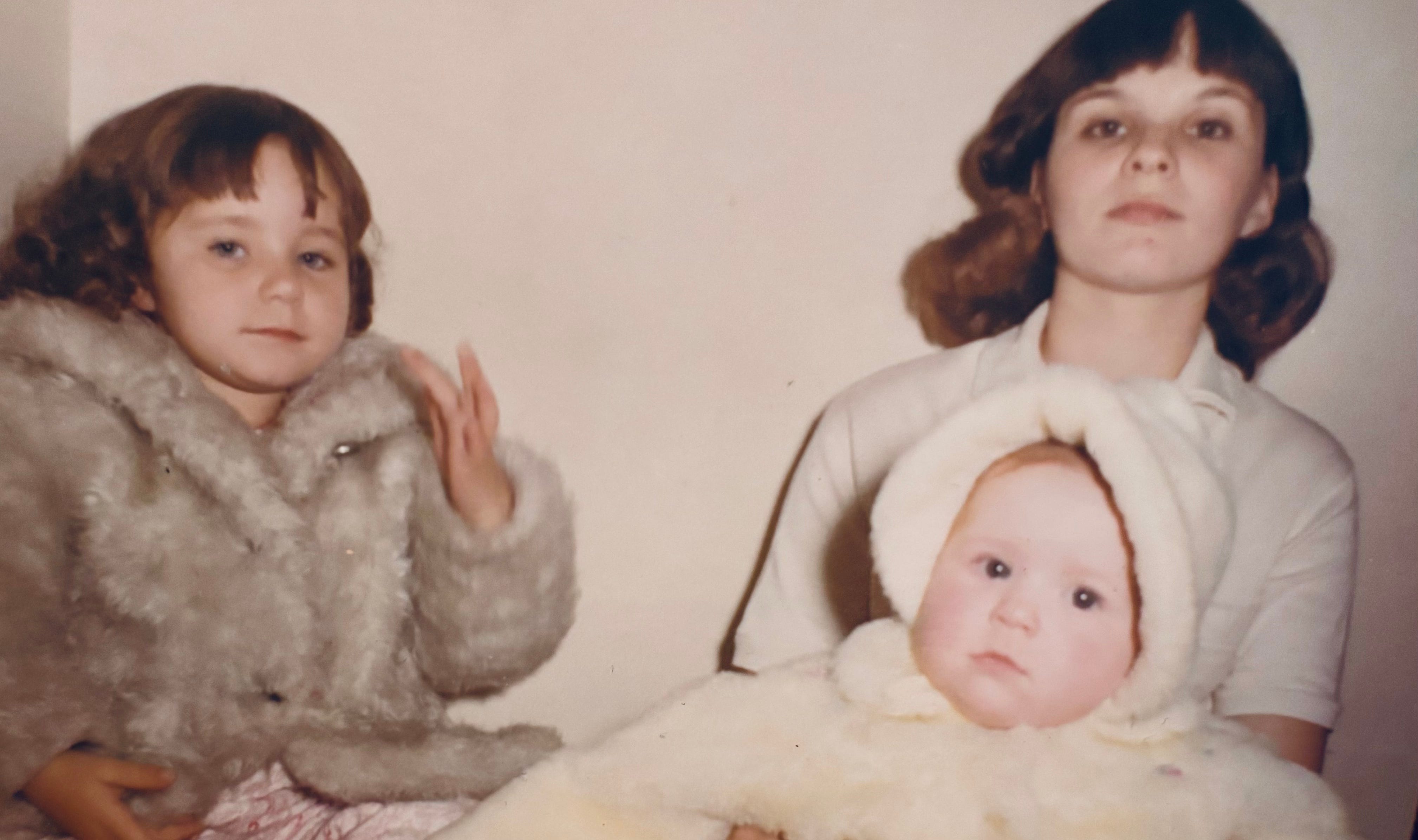
I’ll never forget the day Carrie told me she’d been diagnosed with cancer. She had been waiting for test results and when she called, I quickly shoved my feet into shoes and left the house so I could talk freely, cry freely, as she explained what they’d found. Carrie repeated that difficult conversation over and over, calling the whole family individually so we could each hear the news directly from her, a departure from our usual approach, which was to tell one person and let the family gossip train do the work of informing everyone else. Those conversations kicked off nineteen agonizing months of surgery, pain, fear, distress, and sadness for Carrie. For the rest of us, for me, there was fear as well as the deepest yearning—a frantic, desperate hope—for everything to turn out well. When it didn’t, and instead she died, it was like an eerie silence descending after the thunderous explosion of a bomb. All anxiety and panic and hope obliterated in an instant; a heavy nothingness all that was left behind.
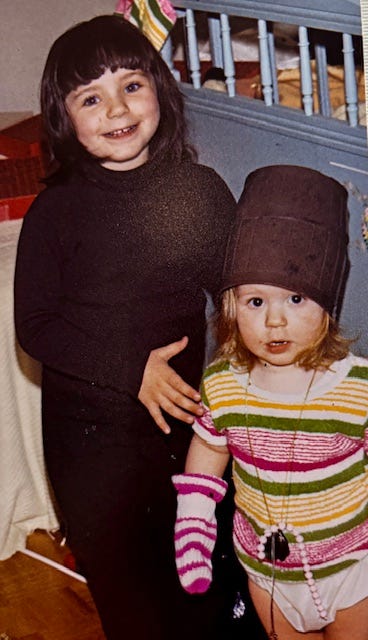
Years before then, Carrie and I were on the phone discussing—brace yourself because this was some next level angsty catastrophizing even for us—what would happen if one of the twins died. It took our collective breath away, the very idea that one of our twin sisters should ever have to live without the other, and it was weeks before I could stop agonizing over it happening. But never once in that time or after did I worry about Carrie dying. Like the mountains or the sun or the ocean, she was there before I arrived, and her continued presence was a given. Once, Mom found baby me dangling precariously from Carrie’s three-year-old arms. I’d been crying and she had picked me up to comfort me, so the story goes, and Mom had crept slowly toward her, saying, in that high-pitched sing-song voice we all use for children, oh, look at you, holding your baby sister, to rescue me from toddler Carrie’s embrace. But I never doubted my big sister’s love and protection and I knew with absolute certainty it would last a lifetime. What I never imagined was it would last her lifetime, not mine.
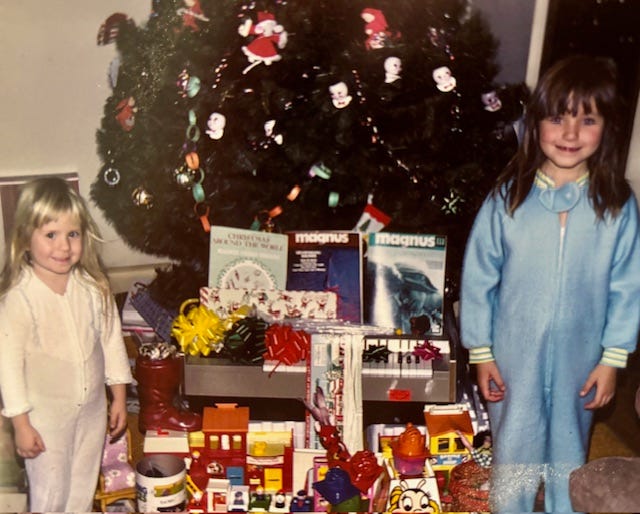
My family structure looks like this: sister-sister—brother—sistersister. Carrie, then me, a six-year gap, then Jamie, another six-year gap, then Christina and Roseann. Though we all have the same parents, we joke we are from two families, one consisting of Carrie and me, the other Christina and Roseann, and Jamie a part of both. It’s fitting because, though we did plenty of things together, there are scads of memories unique to each of those so-called separate families. When Carrie died, I felt like some of my memories died with her. No one else can reminisce with me about the time Carrie organized the neighbourhood kids to put on a production of Grease, our parents the unwitting audience. No one else remembers the raffle she spearheaded, selling tickets for the prize cake door-to-door until one of them was opened by a police officer who told us what we were doing was illegal. And now who is there to marvel with me about a man so law-abiding he’d spoil the innocent fun of a group of kids who only wanted to earn enough money to buy candy from the corner store? My siblings don’t remember our small first house, seven of us crammed inside its 1100 square feet, tiny rooms with multiple beds, a small den turned bedroom-for-two. They don’t recall the backyard ice rink our dad built on the circle left by the stored-for-winter above ground pool. Nor summers at our grandma’s cottage, the weedy waters of Lake Simcoe a ten-minute barefoot walk away, the nearby general store where a bag of potato chips could be had for twenty-five cents. Only I was there when Carrie answered the phone in the middle of one April night and was told we had two new baby sisters. And no one but me hid behind Carrie’s back at two of our uncles’ weddings as she sidled up to the open bars and boldly procured pop after pop after pop for us to guzzle while our parents were otherwise occupied.
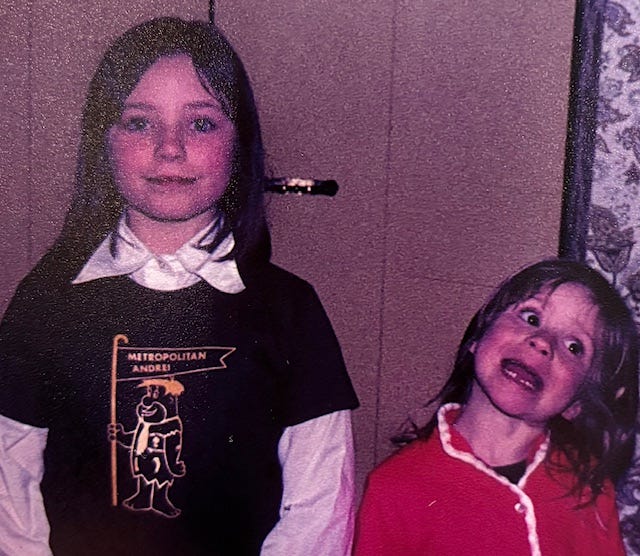
There are a thousand—million! billion!—words I could write about what it was like to lose Carrie. She was my partner in crime (well, I was her accomplice, at least), my leader, my bossy big sister, my most enduring and loyal friend. Carrie was two years and three-hundred-and sixty-four days older than me, a level of precision important to me when I was a kid because it meant, in kid logic, that she was only two years older than me for one (glorious) day each year. When our brother, Jamie, was born, I was thrilled to become a big sister like her, even though it meant I became the dreaded—wah wah—middle child, too. Until, that is, our youngest siblings, Christina and Roseann, arrived six years later to push Jamie into that much maligned spot and stake dual claim to being the youngest child(ren). All this to say, I’ve only ever existed in relation to my siblings. There has never been a me without them. And even though I’ve been the youngest, the middle, and the quasi-co-middle because *twins*, I’ve never been anything without Carrie. It’s impossible to know who I would be, who I am, without her. She was the first and I was the second, but when there is no longer a first, where does that leave second?